Frequency and Focus: How Ryuichi Sakamoto's Music Quietly Conquered the American Home Office

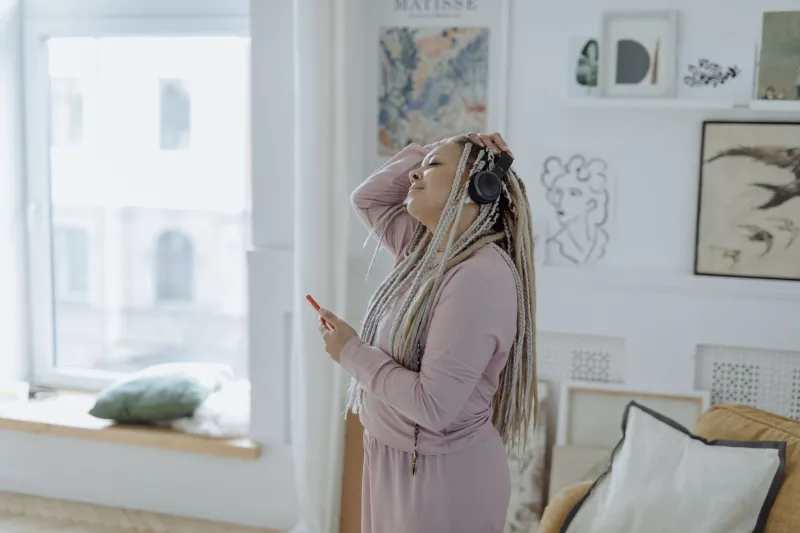
When millions of Americans retreated from offices and conference rooms during the pandemic years, an unexpected companion emerged from their speakers: the compositions of Ryuichi Sakamoto. His music, long celebrated in concert halls and film theaters, found an entirely new audience among remote workers seeking sonic refuge from the disorder of domestic life. The phenomenon was neither orchestrated nor anticipated — and that, perhaps, is precisely what made it so enduring.
A Playlist Phenomenon With Deep Roots
By late 2020, Spotify and Apple Music had each seen dramatic surges in streams of instrumental and ambient music. Curators tracking listener behavior noted something specific within that broader trend: Sakamoto's catalog was being added to focus playlists at a rate that outpaced nearly every comparable composer. Albums such as Thousand Knives, B-2 Unit, and the austere solo piano record async were appearing alongside Brian Eno and Harold Budd — but Sakamoto's entries consistently held the top positions in user-generated work playlists across major American cities.
The numbers were striking on their own. The cultural logic behind them, however, required closer examination.
"There's something structurally unique about how Sakamoto builds a piece," said Dr. Elena Marsh, a cognitive psychologist at the University of Michigan who has studied the relationship between musical texture and sustained attention. "His compositions tend to avoid the kind of melodic resolution that triggers emotional engagement. They present movement without arrival. For someone trying to concentrate, that quality is genuinely valuable — the brain registers activity without being pulled toward it."
This distinction between presence and intrusion is central to understanding why Sakamoto's work performs so well in functional listening environments. Where many ambient composers produce music that is consciously designed to disappear, Sakamoto's work retains a degree of structural integrity — a sense that something is being said, even if the listener cannot quite articulate what. That balance, between engagement and neutrality, appears to be the operative ingredient.
The Sonic Architecture of Concentration
Sakamoto's compositional approach draws from an unusually wide range of influences: Japanese minimalism, European classical tradition, electronic experimentalism, and a philosophical engagement with the natural world that manifested most directly in his later work. The result is music that does not belong cleanly to any single genre — and that ambiguity serves the remote worker's environment well.
Consider Merry Christmas, Mr. Lawrence, perhaps his most recognizable piece outside of dedicated listeners. The melody is present, even memorable, but it unfolds slowly, with long intervals between its most emotionally weighted moments. It neither demands nor deflects attention. In a home office context, where the worker must remain alert but not overstimulated, this pacing functions almost as a form of environmental calibration.
James Okafor, a software architect based in Austin who began working remotely in March 2020, described his discovery of Sakamoto as accidental. "I was working through a Spotify radio station built around Ólafur Arnalds, and Thousand Knives came on. I didn't know who it was, but I noticed I had been coding for two hours without looking up. That almost never happens. I went back and found the whole catalog."
Okafor's experience is representative of a broader pattern. Streaming data analysts note that Sakamoto's tracks frequently appear at the midpoint of extended listening sessions — the point at which listener attention would ordinarily begin to drift — and that session abandonment rates drop when his compositions are in rotation. The music, in a measurable sense, keeps people at their desks.
Chaos as Context
The timing of Sakamoto's productivity-playlist ascent cannot be separated from the conditions of the early pandemic period. American workers were not simply adjusting to new office arrangements; they were managing childcare, grief, anxiety, and the continuous low-grade noise of a household that was never designed to be a workplace. The demand placed on background music in that environment was therefore more complex than it might initially appear.
Music that was merely neutral risked being insufficient. Music that was emotionally direct risked becoming destabilizing. What many listeners discovered in Sakamoto's catalog was something that occupied a third position: music that acknowledged difficulty without dramatizing it. The minor tonalities in pieces like Aqua and Tibetan Dance carry emotional weight, but they do so without urgency. They suggest contemplation rather than crisis.
"Sakamoto understood impermanence in a way that very few composers have," said cultural critic and music essayist David Frey, writing in a widely shared 2021 essay on pandemic listening habits. "His late work especially carries a quality of acceptance — not resignation, but a kind of spacious calm. That's exactly the register that people needed when everything felt uncertain."
Frey's observation points to something that productivity metrics alone cannot fully capture. The appeal of Sakamoto's music during this period was not purely functional. It was also, for many listeners, deeply personal — a way of processing the ambient grief and dislocation of a genuinely unprecedented moment.
Beyond the Pandemic Moment
What is perhaps most significant about Sakamoto's emergence as a productivity-playlist fixture is that the trend did not recede when pandemic restrictions lifted. As American workers negotiated hybrid schedules and returned — partially or fully — to shared office environments, streaming data continued to show strong performance for his catalog in work-context playlists.
This persistence suggests that something more durable than circumstance is at work. Listeners who discovered Sakamoto's music as a coping mechanism during the pandemic appear to have retained it as a preferred work companion long after the original conditions that prompted the discovery had changed.
"I think people found something they didn't know they were missing," said Dr. Marsh. "There's a whole category of music that's intelligent without being demanding, emotional without being consuming. Sakamoto is one of the very few composers who consistently works in that register. Once you've found it, you don't tend to give it up."
For Sakamoto Archive, this phenomenon carries a particular resonance. The composer spent decades working at the intersection of high art and popular culture, resisting easy categorization while building a body of work of remarkable breadth and consistency. That this work should ultimately find one of its most devoted audiences among American professionals seeking focus and calm in a chaotic era feels, in retrospect, less like an accident than an inevitability.
The music was always built to last. It simply took the right conditions for the right listeners to hear it clearly.