Ambient Ambition: How Ryuichi Sakamoto Became the Unlikely Patron Saint of the American Workday

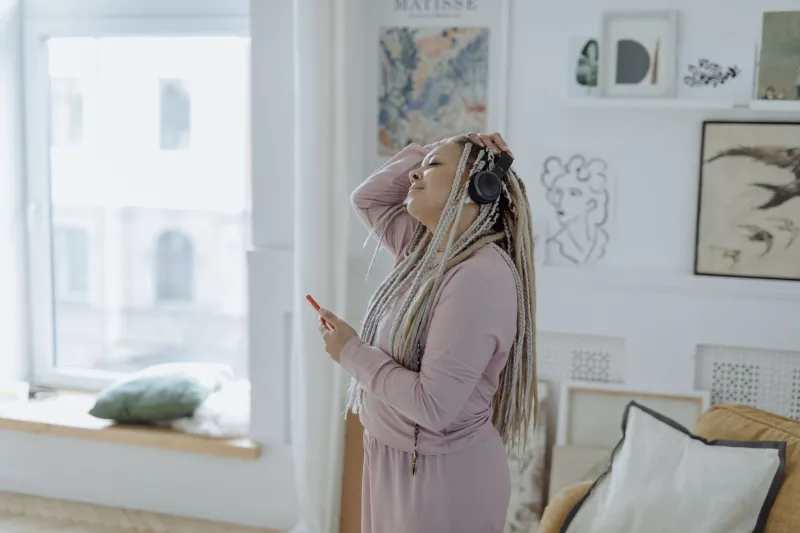
Somewhere between a deadline and a second cup of coffee, millions of Americans are pressing play on the same composer. His name may not appear on the playlist title. The algorithm may have slipped him in between ambient synthesizer tracks and rain-soaked piano loops. But Ryuichi Sakamoto is there—his notes threading through open-plan offices, graduate school libraries, and the makeshift home desks that became permanent fixtures during the pandemic years. What began as one of the twentieth century's most restless artistic experiments has, through a combination of cultural drift and digital curation, become the unofficial score of American productivity culture.
The phenomenon is worth examining carefully, not because it diminishes Sakamoto's legacy, but because it illuminates something profound about how his music operates—and what American workers are actually seeking when they reach for it.
The Playlist Pipeline
The route from Sakamoto's studio to a Spotify focus playlist is not as unlikely as it first appears. Lo-fi hip-hop, a genre that emerged from YouTube livestreams in the early 2010s and exploded into a full streaming category by 2020, drew heavily from jazz, ambient, and minimalist classical sources. Curators began incorporating tracks from Thousand Knives, B-2 Unit, and the Merry Christmas, Mr. Lawrence score as foundational textures—pieces that provided emotional warmth without lyrical distraction.
Music curators who build these collections describe Sakamoto's work as occupying a rare structural sweet spot. His compositions move, but they do not demand attention. They carry emotional weight without resolving into anything that pulls a listener away from the task at hand. One playlist architect, who manages a collection with several million monthly listeners, described his approach plainly: "Sakamoto writes music that feels like weather. You're aware of it, but it doesn't interrupt you. That's almost impossible to manufacture intentionally."
That quality—what might be called productive presence—has made his catalog a recurring fixture across platforms including Apple Music's Focus category, YouTube study channels, and third-party apps like Brain.fm and Endel, which use algorithmic layering to extend ambient compositions into unbroken sonic environments.
From Art Object to Functional Tool
The tension at the center of this adoption is not new. Composers from Erik Satie to Brian Eno have grappled with the question of music designed to recede. Satie's concept of musique d'ameublement—furniture music, intended to blend into the environment—was partly satirical, a provocation aimed at audiences who insisted on treating every note as worthy of reverent attention. Eno's ambient series was more sincere, but equally deliberate in its embrace of functional listening.
Sakamoto occupied a more complicated position. His career resisted easy categorization, moving between avant-garde electronics, pop songwriting, film scoring, and late-period solo piano with a restlessness that suggested a composer permanently dissatisfied with any single mode. He spoke openly about music as a form of inquiry, a way of investigating the relationship between sound, time, and human consciousness. His final album, 12, recorded during cancer treatment and released posthumously in 2023, was described by the composer himself as notes made for his own private listening—an intimate document of a man confronting mortality through sound.
To place that same music in a productivity playlist is, on one reading, a category error of significant proportion. On another, it may be the most honest testament to what Sakamoto achieved: music so fundamentally attuned to the interior experience of being alive that it functions across contexts, adapting to whatever emotional register the listener brings.
What Gen Z and Millennials Are Actually Looking For
The demographics of Sakamoto's new audience are telling. Research into ambient and lo-fi listening habits consistently identifies Gen Z and millennial workers—particularly those in knowledge-economy roles—as the primary consumers of focus-oriented playlists. These are generations that came of age amid economic instability, accelerating digital noise, and the gradual erosion of boundaries between professional and personal life. The appeal of music that creates a sense of calm enclosure is not difficult to understand in that context.
What is more interesting is the specific quality of calm that Sakamoto's work provides. Unlike purely generative ambient music, which can feel featureless and slightly sterile, his compositions carry an unmistakable human signature. There are decisions in every phrase—a choice to delay resolution here, to let a note decay without reinforcement there—that communicate something deliberate and emotionally considered. Listeners may not consciously register these choices, but they register their effect: the sense that the music was made by someone who cared, deeply, about the experience of listening.
For workers navigating environments that often feel indifferent to individual experience, that quality of felt intention may be precisely what makes Sakamoto's music so restorative. It is not merely neutral background noise. It is the sound of someone paying close attention—which, in turn, grants permission to do the same.
The Ethics of Repurposing
The question of whether this mass adoption honors or distorts Sakamoto's intent does not resolve cleanly. There is a reasonable argument that any music removed from its original context and redeployed as a productivity tool risks a kind of flattening—reducing complex artistic statements to functional utilities. Sakamoto's work on Merry Christmas, Mr. Lawrence, for instance, was composed in direct dialogue with the film's themes of cultural collision, wartime trauma, and repressed desire. Heard as a focus aid, those resonances disappear entirely.
And yet Sakamoto himself demonstrated, across decades, a remarkable openness to the ways listeners found their own meanings in his work. He collaborated with visual artists, architects, and technologists. He scored meditative installations alongside commercial films. He released albums that seemed deliberately designed to dissolve the boundary between composed music and natural sound. The idea that his work might continue to find unexpected contexts after his death is not inconsistent with the spirit of an artist who rarely defended his compositions against reinterpretation.
What seems most important is that the listeners who discover Sakamoto through a study playlist do not stop there. The archive is vast, and its depths reward the kind of focused attention that his music, paradoxically, helps to cultivate.
A Legacy That Keeps Expanding
The Sakamoto effect—the quiet spread of his compositions into the ambient infrastructure of American daily life—is ultimately a measure of how thoroughly he understood the relationship between music and human interiority. He wrote for the space between notes as much as for the notes themselves. He understood silence as a compositional element, not an absence. And he made music that, whatever context surrounds it, communicates the value of slowing down and listening carefully.
In a culture that frequently confuses busyness with purpose, that message is neither trivial nor accidental. It may, in fact, be the most subversive thing about his presence in the American workday: that the music people play to be more productive is, at its core, an invitation to be more present.