Prescribed in Sound: How Americans Are Turning to Ryuichi Sakamoto for Mental Restoration
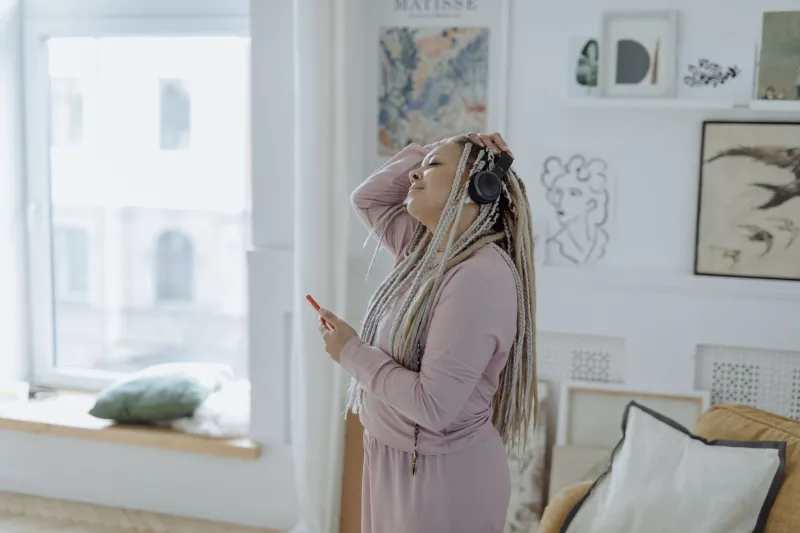
There is a particular kind of quiet that Ryuichi Sakamoto understood better than most. Not the absence of sound, but the deliberate architecture of stillness — notes placed with such care that the spaces between them carry as much meaning as the tones themselves. For millions of Americans navigating the relentless pressures of modern life, that quality has become something more than aesthetic appreciation. It has become a form of medicine.
Across the country, from therapy offices in New York to meditation studios in Los Angeles, from college dormitories in the Midwest to suburban living rooms in the South, Sakamoto's music has quietly embedded itself into the rituals of mental restoration. The phenomenon is informal but widespread, and it raises a genuinely compelling question: what is it about this particular composer's work that makes it so effective for the human nervous system under duress?
The Sonic Architecture of Calm
To understand why Sakamoto's compositions lend themselves so naturally to wellness applications, it helps to consider what distinguishes his approach from other ambient or classical music. His work does not simply occupy space — it organizes it. Albums such as async (2017) and 12 (2023) demonstrate a compositional sensibility that prizes restraint above all else. Harmonic progressions resolve slowly, if at all. Dynamics shift in gradations rather than dramatic swings. Textures layer without crowding.
Neuroscientists who study the physiological effects of music have begun paying closer attention to these structural properties. Research conducted at institutions including Stanford University and the University of California, San Francisco has identified specific musical characteristics — slow tempos, predictable harmonic movement, minimal percussive attack — that correlate with reduced cortisol levels and decreased heart rate variability. Sakamoto's output, particularly his solo piano and electronic ambient work, consistently exhibits these properties.
Dr. Nina Hartwell, a clinical psychologist practicing in Chicago who has integrated music-assisted relaxation into her treatment protocols, describes Sakamoto's compositions as occupying a rare middle ground. "Most music that people associate with relaxation is either too passive — it becomes wallpaper — or too emotionally loaded, which can actually heighten arousal rather than reduce it," she explains. "Sakamoto's work has emotional content, but it's open-ended. It invites the listener inward without directing them toward a specific feeling. That's therapeutically very useful."
From Streaming Playlists to Clinical Practice
The data from major streaming platforms tells part of the story. Spotify's internal categorization has placed Sakamoto's compositions in hundreds of algorithmically generated playlists under tags including "sleep," "focus," "meditation," and "stress relief." Tracks such as "Merry Christmas Mr. Lawrence," "Thousand Knives," and the solo piano pieces from async accumulate millions of plays in these contexts every month — listeners who may have arrived through a wellness search rather than any prior knowledge of Sakamoto's broader legacy.
But the movement extends beyond passive playlist consumption. Certified music therapists affiliated with the American Music Therapy Association have begun documenting the deliberate use of Sakamoto's compositions in structured therapeutic settings. In sessions designed to address generalized anxiety disorder, PTSD, and insomnia, therapists report that his music functions particularly well during what clinicians call the "receptive phase" — the portion of a session in which the patient listens rather than participates actively.
James Okafor, a board-certified music therapist based in Atlanta, describes working with veterans experiencing hypervigilance. "One of the challenges with this population is that conventional relaxation music can feel infantilizing or emotionally false," he notes. "Sakamoto's work has a kind of gravity to it. It doesn't pretend the world is simple. That honesty seems to give patients permission to let their guard down."
Everyday Americans and the Ritual of Listening
Beyond clinical settings, the integration of Sakamoto's music into private wellness routines speaks to something broader about how Americans are renegotiating their relationship with sound. In an era defined by information overload, social media noise, and the ambient hum of digital notifications, the deliberate choice to sit with Sakamoto's compositions represents a form of counter-programming.
Maria Chen, a thirty-four-year-old software engineer in Seattle, began listening to 12 — Sakamoto's final album, completed while he was managing cancer treatment — during a particularly demanding period at work. "I wasn't looking for it specifically," she recalls. "A colleague mentioned it. But once I started, I noticed I was sleeping better. I wasn't reaching for my phone as much in the evenings. There was something about the album that made the silence afterward feel different — more like rest than emptiness."
Her experience is far from unusual. Across Reddit communities dedicated to sleep hygiene, anxiety management, and mindfulness practice, Sakamoto's name surfaces regularly. Users recommend specific albums for specific states: async for deep focus, Thousand Knives for energized concentration, the Merry Christmas Mr. Lawrence soundtrack for emotional processing. The informal taxonomy that has emerged around his catalog in these spaces reflects a sophisticated, if intuitive, understanding of his compositional range.
The Question of Intention
It is worth pausing to consider what Sakamoto himself might have made of this particular dimension of his legacy. He was, by all documented accounts, a composer deeply invested in the relationship between sound and the physical world — in the way vibration interacts with space, with the body, with consciousness. His late-career explorations of field recording, microtonality, and the acoustics of natural environments suggest a sustained interest in music as something experienced rather than merely heard.
In interviews conducted during the final years of his life, he spoke frequently about the act of listening as a discipline — something that required cultivation and attention in the same way that composition did. The notion that listeners were bringing that same quality of attention to his work in the context of healing would, by most reasonable inference, have resonated with his broader artistic philosophy.
A Lasting Resonance
What the wellness movement surrounding Sakamoto's music ultimately illuminates is the depth and durability of his compositional achievement. That work created decades ago for film, for the concert hall, or for personal artistic exploration should now function as a tool for navigating twenty-first-century anxiety is not a coincidence. It reflects the precision and humanity embedded in every compositional choice he made.
The American embrace of Sakamoto's music as a wellness resource is, in its own way, a form of critical recognition — one that operates outside the formal apparatus of awards and critical reviews, and perhaps speaks more directly to the enduring power of his work. When a composition helps someone sleep, or quiets a racing mind, or creates a moment of genuine stillness in an overstimulated day, it has achieved something that no amount of institutional praise can fully account for.
In that sense, the frequencies Sakamoto devoted his life to exploring continue to do exactly what he always hoped sound could do: reach the listener in the place where words cannot follow.