In the Room Where It Happened: The Creative Partnerships That Defined Ryuichi Sakamoto

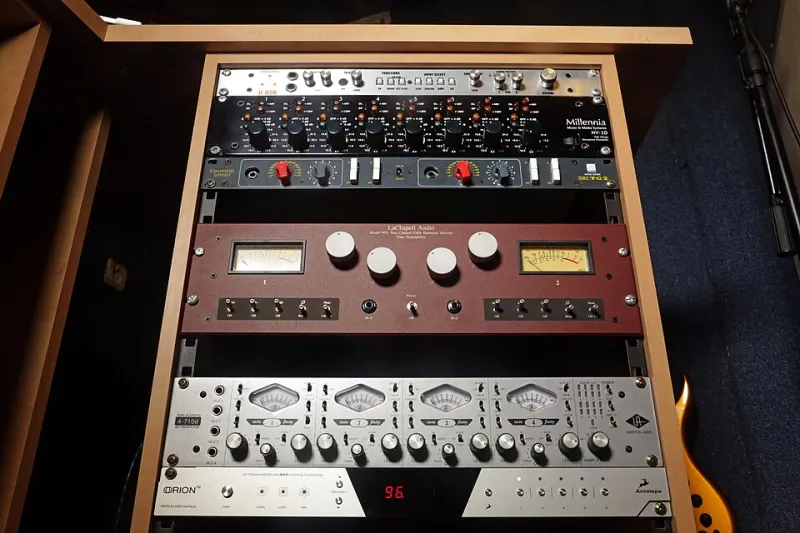
Photo: two musicians collaborating recording studio mixing console creative session, via i.pinimg.com
Ryuichi Sakamoto once described the collaborative process as a form of listening that precedes any act of creation. Before a note is placed, before a synthesizer patch is selected or a piano line is sketched, there is the act of attending — to another person's sensibility, to the particular quality of their silence, to what they bring into a room simply by being present. This philosophy, articulated in various forms across decades of interviews and liner notes, was not merely rhetorical. It was structural. The most significant chapters of his career were written in partnership.
What follows is an attempt to reconstruct those partnerships — not through the finished recordings alone, but through the accounts of those who were present, and through the documentary record that Sakamoto himself left behind.
David Byrne and the Friction That Generates Light
The collaboration between Sakamoto and David Byrne that produced My Life in the Bush of Ghosts (1981) and, more directly, Beauty (1989) remains one of the most discussed creative partnerships in the history of popular music. What is less often examined is the precise nature of the friction that made it generative.
Byrne, arriving from the post-punk New York art scene, brought a deconstructive sensibility — an interest in the uncanny displacement of familiar forms, in the unsettling of genre expectations. Sakamoto, trained in the Western classical tradition but equally steeped in Japanese avant-garde thought, was drawn to a different kind of strangeness: the strangeness of deep listening, of sounds allowed to exist without resolution.
Engineers who worked on sessions during the Beauty period have described the dynamic as one of productive misalignment. Neither artist was attempting to produce a synthesis of their respective approaches. They were, instead, placing their sensibilities in proximity and observing what emerged. The result was music that belonged fully to neither of them — and was richer for it.
Byrne has spoken publicly about Sakamoto's remarkable capacity to receive input without defensiveness. In a 2017 interview, he recalled Sakamoto's response to a structural suggestion that contradicted weeks of prior work: not resistance, but a kind of alert curiosity, as though the contradiction itself were interesting data.
Alva Noto and the Grammar of Reduction
If the Byrne collaboration was defined by productive friction, the long partnership between Sakamoto and the German electronic artist Alva Noto (Carsten Nicolai) was defined by something more like shared silence. The series of albums they produced together — beginning with Vrioon in 2002 and extending across more than a decade — represent perhaps the most sustained exploration of minimalism in Sakamoto's catalog.
Nicolai has described the working process in terms that illuminate Sakamoto's collaborative philosophy from the outside. The two artists would exchange material remotely, each responding to what the other had sent, gradually building structures of extraordinary delicacy from elements that, in isolation, might seem almost too sparse to sustain attention. The discipline required was significant: the temptation to add, to fill, to resolve had to be continuously resisted.
What emerged from this restraint was a body of work that has proved remarkably durable. The Alva Noto / Sakamoto recordings have become reference points not only for ambient and electronic composers but for a generation of sound designers, film composers, and installation artists who found in their shared vocabulary a model for how much can be communicated through near-absence.
Nicolai has noted that Sakamoto brought to their collaboration a quality he found unusual among musicians trained in the classical tradition: a genuine comfort with incompleteness. Many composers, he has observed, feel compelled to resolve the tensions they introduce. Sakamoto was content to leave them open — to let the listener do the work of completion.
The Session Musicians Who Held the Architecture Together
Beyond the celebrated partnerships, Sakamoto's recordings were shaped by a rotating community of session musicians and studio engineers whose contributions have received less public attention but were, by multiple accounts, essential to the character of the finished work.
Percussionists who worked on his film scores have described his directorial style as unusually non-prescriptive. Rather than providing detailed notation or explicit instruction, he would play a reference recording — often something entirely outside the genre of the piece being scored — and ask the musician to describe what they heard emotionally. The actual performance would then be oriented toward that emotional description rather than toward a technical specification.
This approach occasionally produced results that surprised even Sakamoto himself. Studio engineers who worked on multiple projects across the 1990s and 2000s have recalled instances in which a session musician's spontaneous interpretation of a passage altered the direction of an entire recording. Sakamoto's response, in these accounts, was invariably the same: not correction, but investigation. What had the musician heard that he had not?
Ryuichi Sakamoto and the Collaborative Imperative
Taken together, these accounts suggest something important about Sakamoto's understanding of artistic authorship. He was not, in the conventional sense, a solitary genius whose vision was executed by others. He was something more interesting and more demanding: a composer whose vision was partially constituted by the act of collaboration itself.
This does not diminish his individual achievement. It contextualizes it. The music that now circulates through concert halls, streaming platforms, film soundtracks, and the broader cultural atmosphere was made possible by a lifetime of careful, disciplined listening — not only to sound, but to people. The archive of his work is also, in this sense, an archive of those encounters.