Engineered for the Ear: How Ryuichi Sakamoto's Studio Decisions Quietly Shaped the Streaming Era
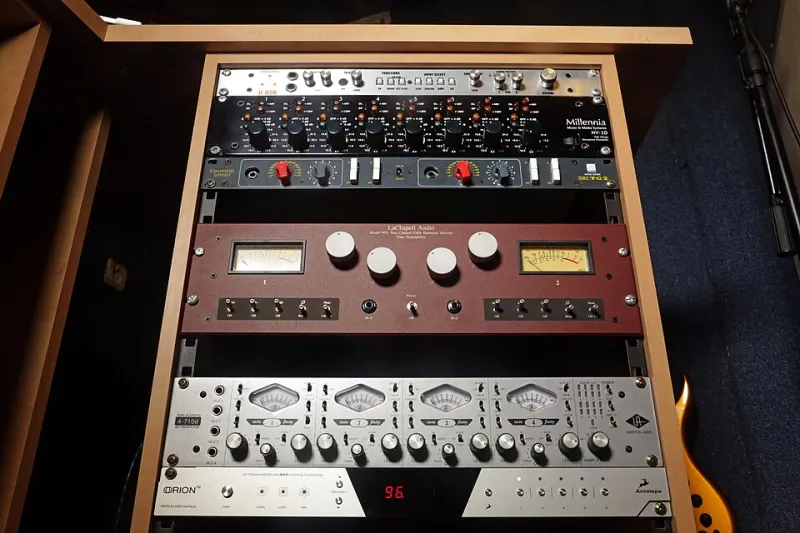
Photo: Nir Yaniv, CC BY-SA 4.0, via Wikimedia Commons
The music industry spent the better part of two decades grappling with what streaming did to sound. Compression artifacts, loudness normalization, the collapse of dynamic contrast into a single flattened tier of volume — these became familiar grievances among producers, mastering engineers, and audiophiles alike. Yet within this conversation, a curious pattern kept emerging: the catalog of Ryuichi Sakamoto held up.
Not merely held up in a sentimental sense, but technically. Albums that Sakamoto produced and refined across the 1980s, 1990s, and into the 2000s were behaving differently through headphones and earbuds than much of their contemporary competition. The reasons, it turns out, were not accidental.
A Philosophy Built Around Clarity
Sakamoto's approach to composition was inseparable from his approach to production. Where many artists of his era leaned into the sonic density that studio technology newly permitted, Sakamoto consistently moved in the opposite direction. His mixes were characterized by deliberate space — a near-architectural awareness of where each frequency lived and how much room it required to register with full emotional weight.
This was not minimalism for its own sake. It was a functional discipline. In interviews spanning his career, Sakamoto spoke frequently about the listener's experience as a kind of physical encounter, a meeting between the sound and the body. He was acutely aware that how a piece was heard — through what device, in what environment — was not a secondary concern but a primary compositional variable.
The practical result was a catalog built with what audio engineers now describe as exceptional frequency separation. Individual elements in a Sakamoto arrangement occupy distinct spectral territories, rarely competing for the same sonic real estate. This characteristic, which may have seemed like an aesthetic preference in 1983, reads today as an almost prescient accommodation of the headphone-listening environment that would come to define music consumption for an entire generation.
Dynamic Range as Emotional Architecture
One of the most consequential casualties of the streaming era has been dynamic range — the distance between a recording's quietest and loudest moments. Loudness normalization systems, deployed by platforms including Spotify and Apple Music to create uniform playback levels across tracks, effectively penalize recordings that were mastered at high volumes. The unintended beneficiaries of this shift were recordings that had always prioritized dynamic contrast over raw loudness.
Sakamoto's catalog falls firmly into this category. Works such as Thousand Knives, B-2 Unit, and the landmark solo piano recordings of his later period were engineered with wide dynamic ranges that communicate emotional information as much as melodic content does. The sudden quiet that follows a dense passage in Merry Christmas Mr. Lawrence is not a gap in the music — it is the music, carrying the same expressive load as the notes surrounding it.
Contemporary mastering engineers working in the streaming context have increasingly cited this approach as a model. When loudness normalization became standard practice, recordings that had been built around dynamic contrast suddenly sounded more intentional, more emotionally coherent, through the same platforms that flattened louder, more compressed productions into sonic monotony. Sakamoto's work had, in effect, been optimized for a system that did not yet exist.
The Headphone Listener as Primary Audience
There is a generational shift embedded in how Americans now consume music. The communal speaker, the living room stereo, the car radio — these remain present, but the dominant mode of listening for much of the population under forty is private and personal, mediated by earbuds or over-ear headphones in transit, at work, or at rest. This mode of listening rewards a very specific set of production qualities: spatial detail, timbral nuance, and the kind of emotional intimacy that does not require volume to land.
Sakamoto understood this listener intuitively, even before the technology fully defined them. His compositions consistently rewarded close, attentive listening in ways that diffused or communal listening environments could not fully reveal. The micro-dynamics of his piano touch, the precisely placed reverb tails in his electronic arrangements, the barely audible breath and texture embedded beneath primary melodic lines — these details emerge most fully through the private listening experience that streaming has made universal.
Audio engineers who have studied his production methods describe a consistent pattern: Sakamoto's mixes were built from the inside out, beginning with the most intimate sonic detail and constructing outward, rather than building a large sound and hoping the details survived. This inversion of standard practice produced recordings that scale down to headphone listening without losing dimension.
Pacing as a Technical Instrument
Beyond frequency and dynamics, Sakamoto's handling of emotional pacing within a composition carries its own technical legacy. Streaming platforms have generated enormous data on listener behavior, and one finding has been consistent: listeners using on-demand platforms skip tracks at high rates during the first thirty seconds, and abandon albums that do not establish emotional engagement within the first few minutes of sequential listening.
Sakamoto's compositional structures, particularly in his ambient and solo works, were built around a model of patient emotional accumulation that nonetheless establishes tonal intention almost immediately. The opening of Thousand Knives orients the listener within seconds. The first phrase of Merry Christmas Mr. Lawrence communicates its entire emotional universe before the second bar resolves. This capacity to be simultaneously unhurried and immediately intelligible represents a balance that contemporary producers, working under the pressure of algorithmic skip rates, now study with considerable interest.
The lesson being drawn is not that Sakamoto composed with streaming in mind — he did not. The lesson is that his compositional priorities happened to align with what the listening environment would eventually demand. Clarity over density. Space over saturation. Emotional pacing over spectacle.
A Standard Without a Manifesto
What distinguishes Sakamoto's influence in this domain from that of a formal technical innovator is the absence of doctrine. He did not publish a manifesto on dynamic range. He did not advocate publicly for headphone-centric production. His influence on contemporary audio engineering practice arrived not through instruction but through example — through a body of work that continued to function beautifully in conditions its creator never anticipated.
For the producers and engineers now navigating the technical demands of an industry reshaped by streaming, that example carries considerable weight. In a field where best practices evolve rapidly and yesterday's standard is frequently obsolete, Sakamoto's catalog offers something rarer: a set of choices that have only become more relevant with time.
The archive, in this respect, is not merely a record of what was made. It is a working document — still consulted, still instructive, still ahead of the curve it never claimed to be drawing.