Five Doors Into Sakamoto: Choosing Your First Album Based on Who You Are Right Now
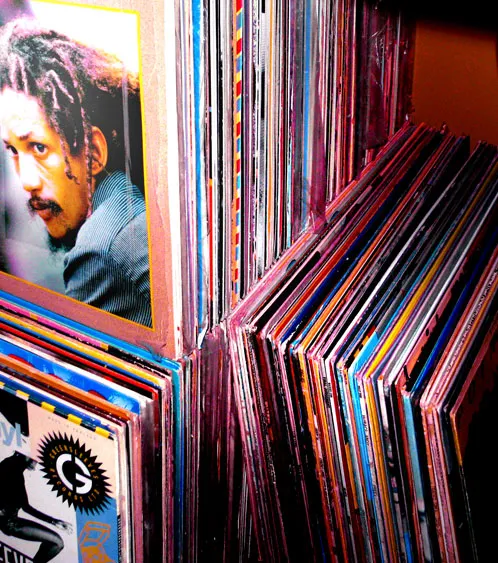
Photo: dubdem sound system, CC BY 2.0, via Wikimedia Commons
The standard advice for approaching a vast catalog is to start at the beginning. With Ryuichi Sakamoto, that advice is almost useless. His debut work arrived within the context of a synth-pop trio in late-1970s Japan, and his final studio album was recorded in the shadow of terminal illness. Between those two poles lies a discography that encompasses electronic pop, orchestral film scores, ambient minimalism, avant-garde improvisation, and everything that resists categorization entirely. Chronology, in this case, is not a map — it is a maze.
The more productive question is not when Sakamoto made something, but what you need from music right now. The following five entry points are organized around exactly that premise. Each one opens a different door into his world. None of them is wrong.
If You're Curious But Noncommittal: Solid State Survivor (YMO, 1979)
Yellow Magic Orchestra was the group that made Sakamoto famous before he was famous as himself. Solid State Survivor, the band's second album, remains the most accessible artifact from that era — a record that sounds genuinely fun in a way that much of Sakamoto's solo work does not prioritize. Tracks like "Technopolis" and "Rydeen" are propulsive, melodically direct, and built for repeated listening without demanding anything heavy in return.
For American listeners who came of age with electronic pop — Daft Punk, early Kraftwerk, or even the more melodic corners of New Order — this album will feel like an immediate handshake. It does not represent the full depth of what Sakamoto became, but it establishes the foundation: a musician who understood that technology could be warm, that machines could swing, and that pop structure was a discipline worth respecting. Think of Solid State Survivor as the lobby. Everything else is upstairs.
If You Loved a Film Score and Followed It Here: Merry Christmas, Mr. Lawrence (1983)
For many Americans, Sakamoto's name first appeared in a film credit. His work on Nagisa Oshima's Merry Christmas, Mr. Lawrence — in which he also acted alongside David Bowie — produced one of the most recognizable piano themes in modern cinema. The album that accompanied that film is a lean, emotionally precise collection that moves between stark piano passages and spare electronic textures without ever overstaying its welcome.
This is the right entry point for listeners who discovered Sakamoto through a movie — whether that film was The Last Emperor, Babel, or anything else — and want to understand how his compositional instincts translate into a dedicated listening experience. The Merry Christmas, Mr. Lawrence soundtrack is short enough to absorb in a single sitting and melodically strong enough to return to without diminishing returns. It also introduces the central tension that defines his best work: restraint in service of emotion, rather than in avoidance of it.
If You Need Something for Long, Quiet Hours: Beauty (1989)
Beauty is one of the stranger entries in Sakamoto's catalog, and for certain listeners, it will be exactly right. Conceived as a record of cross-cultural musical conversation, it features collaborations with artists from West Africa, the American South, and various points between — all filtered through Sakamoto's characteristic compositional sensibility. The result is an album that feels unhurried without feeling static, curious without feeling academic.
For listeners who spend long stretches working from home, reading, or simply moving through a Sunday afternoon without agenda, Beauty rewards the kind of diffuse attention those hours tend to produce. It does not demand that you sit still and focus. It is content to exist in the room with you. That quality — music as ambient presence rather than foreground event — would become increasingly central to Sakamoto's later work, and Beauty is one of the earliest places where it fully coheres.
If You Are Going Through Something Difficult: async (2017)
async was Sakamoto's first solo album in eight years, composed during and after his treatment for oropharyngeal cancer. It is not an easy record. It is also, for listeners in the middle of grief, illness, uncertainty, or any sustained form of difficulty, one of the most honest pieces of music made in the past decade.
The album does not offer resolution. It does not build toward catharsis in the conventional sense. Instead, it holds open the discomfort of not knowing — assembling sounds that feel fractured, searching, and occasionally beautiful in ways that arrive without warning. Field recordings interrupt electronic passages. Silence functions as punctuation. The listener is never quite sure where the ground is, which turns out to be precisely the point.
American audiences who encountered async through the 2018 concert film of the same name, or who found it during the pandemic years when ambient and experimental music saw a significant surge in streaming attention, often describe it as the record that made them understand what Sakamoto was doing across his entire career. It is not a comfortable starting point. For some listeners, it is the only one that makes sense.
If You Want to Understand What All the Reverence Is About: 千のナイフ / Thousand Knives (1978)
Sakamoto's debut solo album, released the same year as YMO's formation, is where his compositional identity first appears in fully realized form. Thousand Knives is a synthesizer record rooted in the political tensions of its moment — the title track was written in response to Mao Zedong's death — but its significance for new listeners lies less in its historical context than in what it demonstrates about Sakamoto's relationship to sound itself.
Here, the synthesizer is not a novelty or a stylistic choice. It is a complete language, capable of menace and lyricism in equal measure. For listeners who want to understand why musicians, producers, and composers across genres have spent forty-five years citing Sakamoto as a foundational influence, Thousand Knives provides the clearest evidence. It sounds, even now, like a record from slightly ahead of wherever music currently is.
A Note on Where to Go Next
None of these five albums is the definitive Sakamoto experience, because no single record can be. What each one offers is a reliable point of orientation — a specific emotional or sonic frequency that, once located, makes the rest of the catalog easier to navigate. The connections between them are not always obvious, but they are always present. A thread runs from the melodic directness of Solid State Survivor through the cinematic restraint of Merry Christmas, Mr. Lawrence, through the ambient patience of Beauty, through the fractured honesty of async, and back to the foundational seriousness of Thousand Knives.
That thread is Sakamoto himself: a musician who never repeated himself and never stopped working, and who left behind enough music to meet a listener wherever they happen to be standing.