Not Background, But Catalyst: How Ryuichi Sakamoto's Compositions Are Rewriting the Rules of Therapeutic Sound
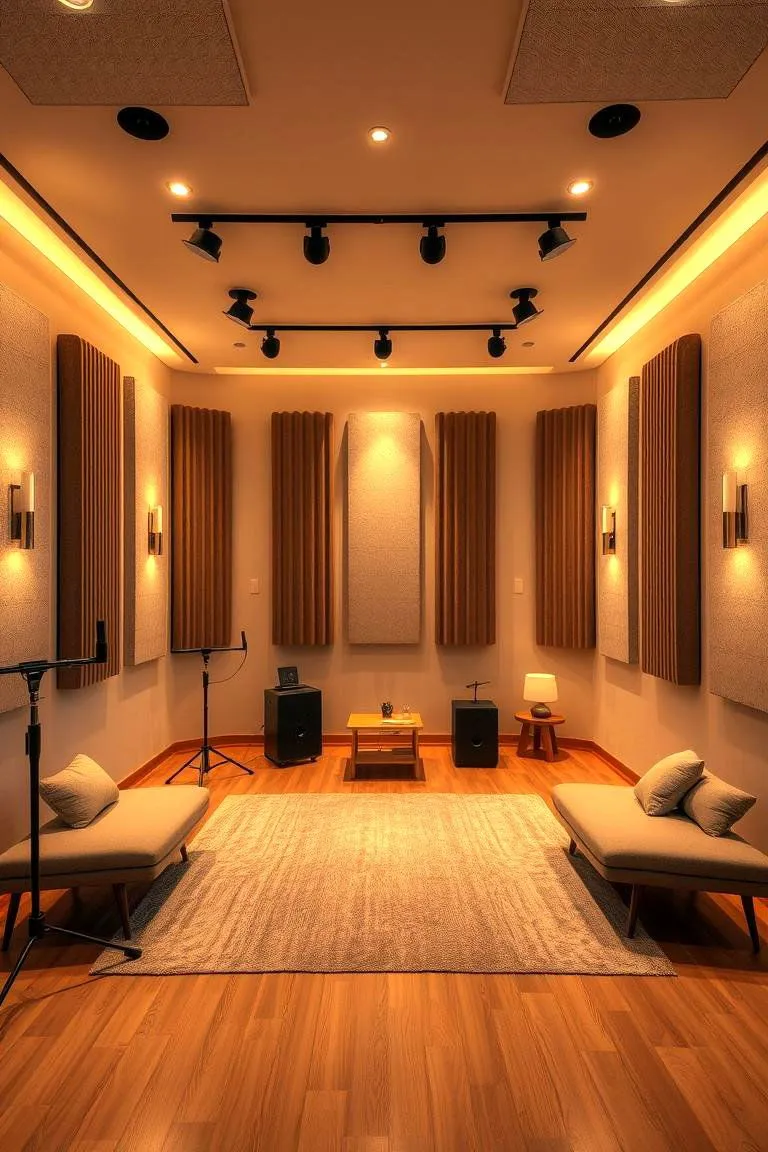
Photo: therapist office calm piano music meditation wellness room, via cdn.diycraftsy.com
There is a meaningful distinction between music that soothes and music that moves. The former asks nothing of the listener. The latter—at its most effective—creates conditions under which something buried can finally surface. For a growing number of therapists, somatic practitioners, and wellness facilitators working across the United States, Ryuichi Sakamoto's compositions occupy this second, more demanding category with unusual consistency.
His work has migrated steadily into clinical and contemplative spaces over the past decade. It appears in trauma-informed therapy practices in New York and Los Angeles, in guided meditation sessions at wellness centers from Asheville to Portland, and across the curated soundscapes of several major meditation applications. What is notable is not merely its presence, but the specific reasoning practitioners offer for choosing it—reasoning that has little to do with the conventional logic of relaxation music.
The Structural Argument
When therapists describe why Sakamoto's music functions in their sessions, they tend to reach for structural language before emotional language. His compositions, they note, are built around what might be called productive incompleteness. Melodic phrases that begin and do not resolve in expected ways. Harmonic progressions that hold tension without releasing it conventionally. Silences that are not empty but weighted.
This architecture, practitioners suggest, mirrors the internal experience of unprocessed emotion with striking accuracy. A client sitting with grief or anxiety does not experience those states as resolved or tidy. Music that moves too swiftly toward resolution can inadvertently communicate that the feeling should also resolve—creating a subtle but real dissonance between the sonic environment and the client's internal reality.
Sakamoto's work, by contrast, tends to inhabit ambiguity without apology. The piano compositions from albums such as async and 12 move at a pace that refuses urgency, dwelling in uncertainty as though uncertainty itself is a legitimate destination. For therapeutic purposes, this quality is not incidental. It is functional.
What Practitioners Are Observing
Across conversations with wellness professionals in the United States, certain observations recur with enough frequency to suggest a pattern rather than coincidence.
Somatic therapists—practitioners whose work centers on the body's role in holding and releasing trauma—have noted that Sakamoto's music appears to facilitate a particular quality of attention in clients: inward-directed, unhurried, and non-defensive. Unlike music with strong rhythmic or melodic dominance, his compositions do not compete for the listener's attention. They create space within which attention can turn toward interior experience.
This is a distinction that matters enormously in trauma-informed practice. Music that is too assertive can activate the nervous system rather than regulate it, particularly in clients whose trauma history involves loss of control or overwhelm. Sakamoto's compositional restraint—his willingness to leave space, to resist climax, to allow a phrase to simply end—operates in a register that many clients find genuinely safe in a way that more conventional ambient music does not.
Meditation app designers and retreat facilitators have arrived at similar conclusions through a different route. In the competitive landscape of American wellness technology, where applications such as Calm and Headspace have built entire sonic identities, the search for music that facilitates genuine contemplative depth rather than performed relaxation has become increasingly sophisticated. Sakamoto's catalog, particularly his later solo piano recordings, has emerged as a reliable resource—not because it signals tranquility, but because it sustains attention without demanding it.
The Philosophical Dimension
Beyond structure, there is something philosophically coherent about Sakamoto's relationship to impermanence and loss that practitioners find resonant for their work. His engagement with mortality—most explicitly in the compositions produced during and after his cancer diagnosis—carries an authenticity that listeners appear to register, even without biographical context.
Grief work, in particular, benefits from music that does not flinch from sorrow. Many therapeutic playlists default toward music that gestures toward hope or resolution, which can inadvertently communicate to grieving clients that their sorrow should be moving toward conclusion. Sakamoto's later work makes no such implication. It sits with what is present, without insisting on what should come next.
This quality connects to Japanese aesthetic principles—mono no aware, the bittersweet awareness of impermanence—that Sakamoto engaged with throughout his career. The cultural origin of these ideas does not diminish their utility in American therapeutic contexts. If anything, their unfamiliarity may contribute to their effectiveness: they offer a framework for emotional experience that falls outside the relentless optimism that characterizes much of mainstream American culture, and in doing so, they grant permission for feelings that culture tends to rush past.
Moving Beyond the Wellness Industry's Easy Answers
It would be convenient to conclude that Sakamoto's music works in therapeutic settings simply because it is quiet and beautiful. That explanation is insufficient and, in important ways, misleading. Quiet, beautiful music is abundant. Not all of it functions as Sakamoto's does.
The more accurate account is that his compositions are structurally and philosophically aligned with the actual demands of emotional processing work. They are built for dwelling, not passing through. They honor complexity rather than resolving it prematurely. They carry the weight of genuine human experience—illness, loss, wonder, uncertainty—in a form that is musically sophisticated without being inaccessible.
For practitioners working in an American wellness landscape that frequently mistakes stimulation management for genuine healing, this distinction matters. Sakamoto's music is not a retreat from difficulty. It is, at its best, a way of staying present with it long enough for something real to shift.
That is a different kind of healing soundtrack—and, for many of the people working in these spaces, a far more valuable one.