Tuned to the World: How Ryuichi Sakamoto Rewired Our Relationship with Everyday Sound
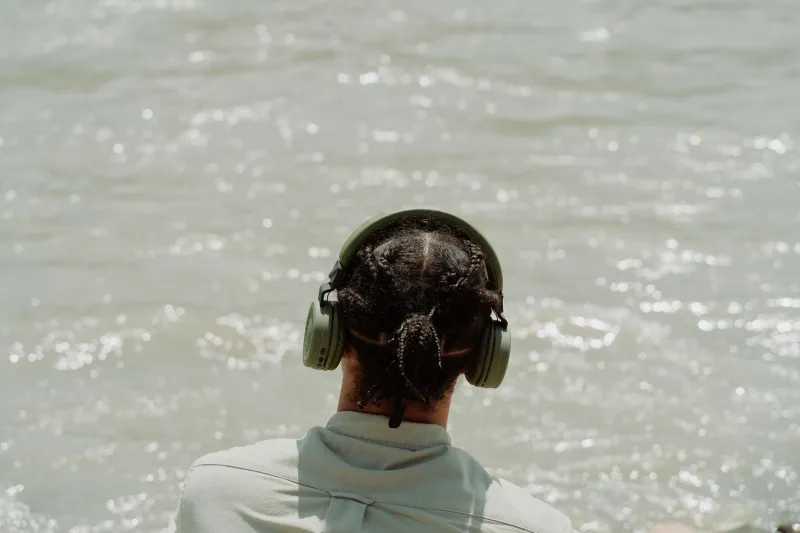
There is a particular kind of listening that most people never practice. It is not passive — the kind that fills a commute or accompanies a meal — nor is it the concentrated attention one brings to a favorite record. It is something rarer: a sustained, almost meditative openness to the sonic texture of ordinary existence. Ryuichi Sakamoto spent the better part of five decades not only practicing that discipline himself but encoding it into recordings that quietly instructed audiences to do the same. The result was a shift in perception that outlasted any single album and continues to reverberate through the work of composers, producers, and sound designers working today.
A Philosophy Before It Was a Practice
Sakamoto's intellectual formation was never purely musical. His studies at the Tokyo University of the Arts exposed him to ethnomusicology and contemporary composition at a moment when Western avant-garde figures — John Cage most prominently — were dismantling the boundary between organized sound and environmental noise. Cage's famous assertion that all sound is music found a receptive mind in the young Sakamoto, but where Cage often foregrounded conceptual provocation, Sakamoto was drawn to emotional consequence. He wanted to know not only whether a dripping faucet could be music, but whether it could move someone.
That question animated his work across genres and decades. Even during the commercially buoyant years of Yellow Magic Orchestra in the late 1970s and early 1980s, when the group's synthesizer-driven pop was filling arenas and influencing a generation of American new-wave acts, Sakamoto was privately cultivating an interest in what he called the "grain" of sound — the micro-textures and incidental frequencies that most recording engineers were trained to eliminate. His later solo career would give that interest full expression.
Thousand Knives to B-2 Unit: The Seeds of Sonic Awareness
Sakamoto's early solo records already demonstrated an unusual sensitivity to space and texture. On Thousand Knives (1978), the synthesizer was not merely an instrument generating melody; it was a medium for exploring the inner life of electronic timbre, the way a sustained tone could shift character depending on the room it inhabited. American listeners discovering these records through import shops in cities like New York and Los Angeles often described an unsettling sensation — the music seemed to notice things they had not.
By the time B-2 Unit arrived in 1980, Sakamoto was explicitly incorporating noise — not as distortion or effect, but as raw material with its own expressive weight. The album's fractured rhythms and industrial textures anticipated by years the aesthetic vocabulary that ambient and IDM producers would later claim as their own. More importantly, it proposed a listening mode: attentive, patient, willing to sit with sounds that did not immediately resolve into comfort.
Thousand Knives of Ryuichi Sakamoto and the Rain That Changed Everything
No single document captures Sakamoto's philosophy of sonic awareness more vividly than the recording sessions and surrounding lore attached to his later ambient work, particularly the period following his cancer diagnosis in 2014. During recovery, he became acutely conscious of sounds he had previously filtered out: hospital equipment, rainfall against a window, the ambient hum of a building's ventilation system. Rather than treat these as interruptions, he began recording them.
The album async (2017) is the most fully realized product of that reorientation. Constructed partly from field recordings — water, wind, the creak of wood, urban ambience captured in Tokyo and New York — it collapsed the distinction between composed music and the world that surrounds it. A track like "andata" places spare piano figures against textures that seem to breathe, as though the room itself were participating in the performance. American critics, many of whom encountered the record through film and design communities rather than traditional music channels, frequently noted that async changed how they heard their own environments for days afterward.
That is precisely the effect Sakamoto was pursuing.
The Influence on Modern Sound Design
The downstream impact of Sakamoto's approach is difficult to overstate, in part because it operates at a level of craft that rarely makes headlines. Sound designers working in film and television — particularly those operating in the quieter registers of prestige drama and documentary — have cited his work as a formative model. The principle, borrowed consciously or not from Sakamoto's practice, is that ambient sound is not background; it is argument.
Producers in the American experimental music scene, from the austere minimalism of artists releasing on labels like Kranky or 12k, to the more accessible ambient work finding audiences on streaming platforms, reflect a Sakamoto-inflected sensibility: the belief that restraint is not absence, and that silence is a material with its own density and character. His collaborations with figures like Alva Noto — whose work with Sakamoto on the Vrioon series (2002) treated digital glitch and static as melodic elements — gave a generation of electronic artists permission to treat imperfection as content.
Filmmakers, too, absorbed the lesson. Directors who have worked with Sakamoto's scores, or who have simply lived with his recordings, describe a heightened attentiveness to the sonic dimension of their own images. The way a scene breathes — the incidental sounds that fill the frame between lines of dialogue — became, under Sakamoto's influence, a compositional concern rather than a technical afterthought.
Silence as the Final Teacher
In the last years of his life, as documented through his public writings and the posthumously released material that continues to surface, Sakamoto returned repeatedly to the idea that silence is not the absence of sound but its most concentrated form. He described sitting in forests, not to escape noise, but to hear what remained when the human-generated layers fell away. The natural frequencies he encountered there — the low-frequency resonance of large trees, the stochastic patterns of rainfall — struck him as music that predated human composition by millennia.
This was not mysticism for its own sake. It was a practical instruction: slow down, pay attention, and recognize that the world is already making music. Your task, as a listener, is simply to become worthy of it.
For American audiences encountering Sakamoto's catalog for the first time — whether through the renewed interest following his passing in March 2023 or through the gradual discovery of records like async and out of noise (2009) — that instruction carries an unusual urgency. In a media environment that rewards volume, speed, and saturation, his work makes a quiet, persistent case for the opposite. It asks nothing more, and nothing less, than that we learn to hear again.
The archive of recordings he left behind is, in this sense, not merely a discography. It is a curriculum.